Proudly Serving Augusta, Rockingham, Albemarle Counties and surrounding areas



Central AC vs. Ductless Mini-Splits: Which Is Right for You?

The Shenandoah Valley is famous for its breathtaking natural landscapes, rich agricultural heritage, and stunning historic architecture. From the classic brick farmhouses of Rockingham County and the century-old Victorians in Winchester to the beautiful stone properties in Harrisonburg and Staunton, our local real estate boasts incredible character. However, owning a piece of Virginia history often means managing outdated infrastructure.
Many of the most charming homes across the valley were constructed long before modern central air conditioning was invented. These properties rely on traditional radiator boilers, baseboard heaters, or wood stoves for winter warmth, leaving them with absolutely zero ductwork infrastructure. When the humid Virginia summer arrives, homeowners face a difficult choice. They must look past noisy, inefficient window units and choose a permanent cooling solution.
The two primary choices for whole-home cooling are traditional central air conditioning and ductless mini-split systems. At Fixed HVAC & Plumbing, we specialize in retrofitting historic and unique properties without destroying their architectural integrity. This guide compares central AC against ductless technology to help you choose the best fit for your Shenandoah Valley home.
The Structural Challenge of Adding Traditional Central AC
Central air conditioning operates on a split-system design, utilizing an outdoor condenser paired with an indoor evaporator coil and blower motor. This system relies on a network of wide sheet-metal or flexible air ducts hidden behind walls, floors, and ceilings to distribute cold air and return warm air for re-cooling.
The Spatial Sacrifice
When a home completely lacks existing ductwork, retrofitting a traditional central AC system requires a major structural commitment.
- Building Custom Chases: Standard residential ducts require substantial physical space to run vertically and horizontally between floors. In an older Shenandoah Valley home, this forces carpenters to build custom drywall chases down the corners of rooms or sacrifice closets to hide the piping, compromising your floor plan.
- Lowering Ceilings: Installers may need to drop ceilings in hallways or bathrooms by several inches to make room for horizontal supply trunks, altering the airy, high-ceiling architecture typical of historic properties.
The Attic and Basement Compromise
If your home features an open attic or an unfinished basement, installers can place the main indoor air handler there and run ducts through the ceilings or floors of the adjacent rooms. While this avoids destroying main living space walls, it still leaves your ductwork running through unconditioned, boiling attic environments, causing the system to lose significant efficiency as cold air travels through hot spaces.
The Ductless Mini-Split Alternative: Freedom from Architecture
Ductless mini-split systems handle the problem of climate control by completely eliminating the need for bulky air ducts. Instead of a single central lung, a mini-split system utilizes localized zone distribution.
How the Technology Functions
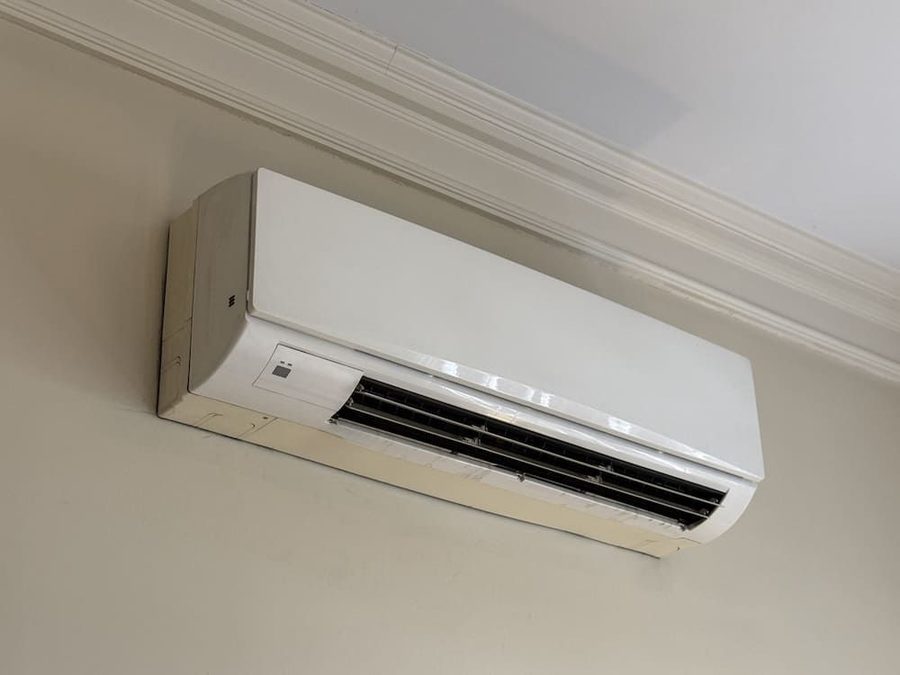
A ductless system consists of a compact outdoor condenser connected to one or more sleek, indoor wall-mounted air handlers. These components are linked by a narrow line set that is roughly three inches in diameter. This bundle holds copper refrigerant lines, a condensate drain tube, and electrical communication wiring.
To install a mini-split handler, our technicians simply drill a single, small hole through the exterior wall behind the indoor unit. The line set feeds directly outside to the condenser, avoiding the need to cut open drywall, sacrifice storage closets, or alter historic framing.
Precision Zone Control
Each indoor mini-split unit operates completely independently with its own thermostat or remote control. This allows you to establish distinct temperature zones throughout your home. You can keep the upstairs bedrooms crisp and cold at night while leaving the downstairs dining spaces uncooled, saving significant amounts of electricity compared to cooling an entire house uniformly.
Evaluating the Financial and Efficiency Realities
The High Cost of Lost Energy
Traditional air ducts are inherently prone to energy loss. According to the Department of Energy, the average ducted system loses between 20 and 30 percent of its conditioned air through minor leaks, poor seam seals, and thermal conduction through duct walls. When you run new ducts through a hot valley attic, your system must work significantly harder to overcome this thermal resistance.
Ductless systems carry zero duct-related energy loss. The cooled refrigerant travels directly to the specific room air handler without any opportunity to absorb ambient attic heat. Furthermore, modern mini-splits utilize advanced inverter compressors that run continuous, low-speed cycles rather than turning completely on and off, lowering your monthly electric utility statements.
Upfront Capital Investment
If you look solely at the cost of the equipment, a central air conditioner can appear more affordable than a multi-zone mini-split system. However, for homes without existing ductwork, you must factor in the immense labor and material costs of custom duct fabrication, drywall patching, framing, and painting. When these structural modification expenses are added to the invoice, a ductless mini-split system often emerges as the more economical and efficient option.
Preserving the Historic Value of Your Property
For properties listed on historic registries or homes with exquisite, original building materials like hand-hewn oak beams, plaster walls, and original heart-pine flooring, preservation is your top priority.
Cutting into true lath-and-plaster walls to run ductwork can cause the historic plaster to crack and crumble across wide sections, requiring specialized, expensive restoration work. A ductless mini-split preserves these historical assets perfectly. The indoor units can be mounted high on the walls, tucked discreetly above entryways, or installed as recessed ceiling cassettes that sit flush with the ceiling grid, keeping the focus entirely on your home’s historic charm.
Claim Complete Comfort This Summer
Living in a beautiful, historic Shenandoah Valley home does not mean you have to endure sweltering summer afternoons or deal with clumsy window units. Whether you choose the hidden uniformity of a retrofitted central AC system or the high-efficiency zone control of a modern ductless mini-split, a permanent cooling upgrade protects your property infrastructure and elevates your daily quality of life.
Take control of your indoor environment ahead of the peak summer humidity. Contact Fixed HVAC & Plumbing today to schedule a home cooling consultation and structural evaluation with our expert technical team. Let our local business design the reliable, high-performance comfort solution that fits your historic home perfectly.